About Dietrich
I started my journey in agroecology sitting in a mudflat outside of Washington DC, pondering the connection between food and our ecosystems. I was working to restore the American Lotus (Nelumbo lutea) to the local watershed. This is a beautiful plant used by indigenous peoples as food. Few daily rituals connect us so directly to the earth as our meals do.
Since then I have worn many hats:
Molecular Ecologist / Geneticist
Farmer
NRCS Scientist (National Soil Survey)
Through it all, I’ve been obsessed with the beauty of mycorrhizal fungi and the synergies they offer. Mycorrhizal fungi are beneficial organisms that interface with plant roots to supercharge their access to soil resources. As ecosystem managers, when mycorrhizal fungi are happy, we’re happy.
These fungi are important for most land management contexts; they are important in forests, in agrofrorestry systems, and with only a few exceptions most farming contexts. They can boost yields, mitigate toxicity, and sequester carbon.
Some mycorrhizal fungi actually produce edible mushrooms. These include some of the most expensive food products in existence.
I’m here for all of it. Whether you are a farmer, a forester, or a manager for a carbon credit origination project; my goal is to help you make educated decisions about how to integrate the management of mycorrhizal fungi into your operation.
Ongoing Project: Porcini and Chestnuts
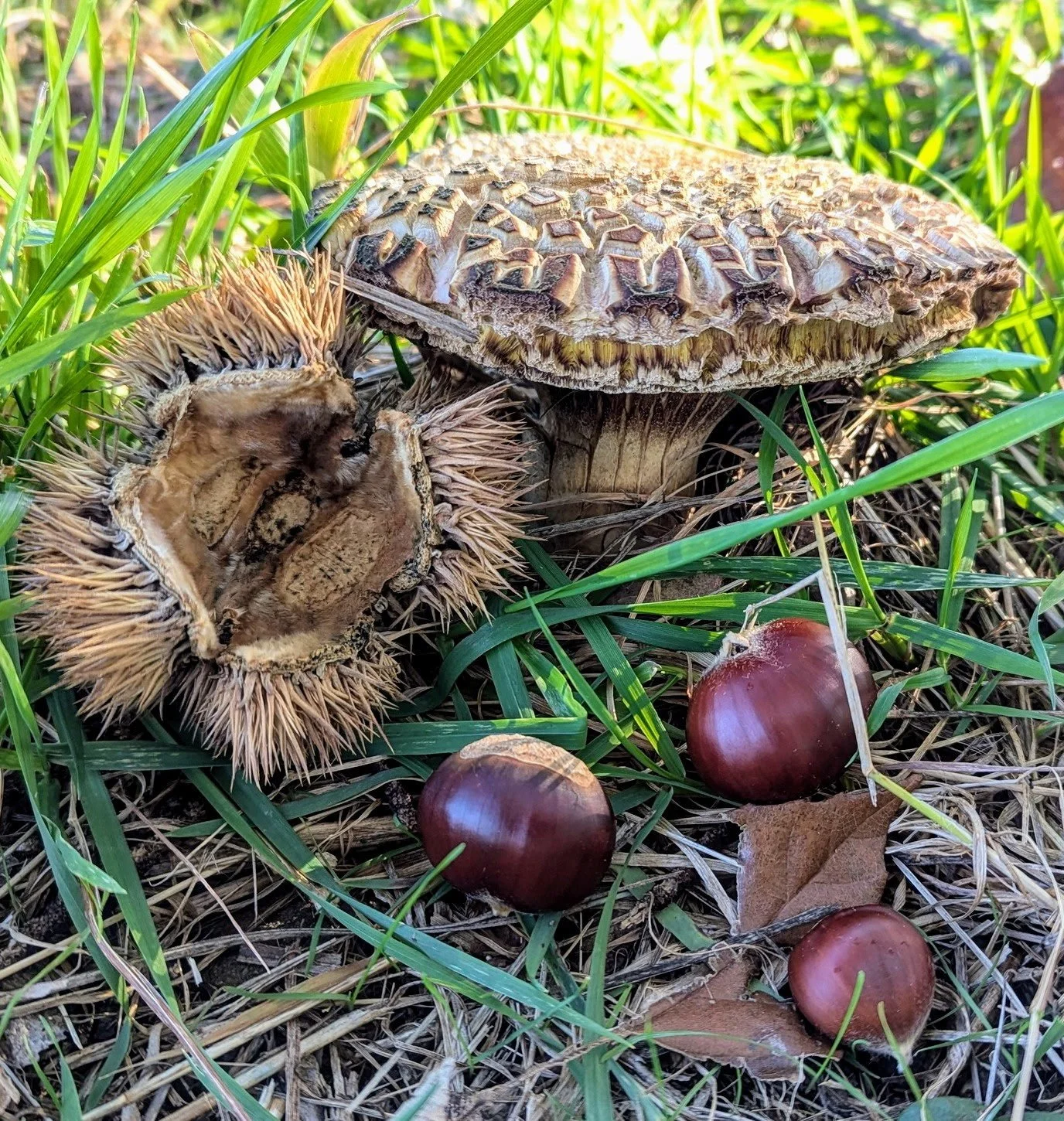
We are leading the effort to establish local and native porcini species (e.g. Boletus variipes var fagicola) in Chestnut orchards.
This collaboration has brought together an unlikely mix of farmers, mushroom cultivators, professional foragers, and academics. It is lead by Badger Johnson of the Ohio Chestnut Company, a wildly talented forester and farmer with an interest in promoting tree nut crops. It is funded by the Sustainable Agriculture Research and Extension grant FNC25-1458.
Porcini increase seedling growth rate and vitality, improving survival and reducing the time to first harvest. This is a huge plus for orchardists. In addition to these benefits, the porcini crop potentially is more valuable than the nut crop in good harvest years. In this project, we are testing a number of methods for cost effective inoculation of chestnut seedlings with locally sourced native porcini mushrooms.
To our knowledge, no one has attempted to cultivate porcini in the US; we’re changing that.
Updates are occasionally posted on Badger’s blog.
Photo credit for this picture belongs with Amy Ciderwood.